

Here's something I don't think gets said enough in the fitness space: Missing a workout is not a failure. Skipping a week is not starting over. And needing to modify your routine when life gets chaotic is not a lack of discipline — it's called being a human person living a real life. I've been a fitness professional for years. I teach multiple classes a week. And I still have weeks where I don't work out the way I planned to. I have weeks where the best I can do is a 15-minute stretch on my living room floor. And I have learned — slowly, stubbornly — that those weeks still count. So let's talk about consistency. What it actually means, why it's so hard, and what I've found actually works. The consistency trap The fitness industry has a consistency problem, and ironically, it's the industry itself that created it. We've been sold this idea that consistency means showing up every single day, hitting every rep, never missing a scheduled session. That consistency is all-or-nothing. That if you miss Tuesday, the whole week is shot, so you might as well start fresh next Monday. This is nonsense, and it keeps people stuck in a cycle of starting and stopping that has nothing to do with their willpower and everything to do with how unrealistic the standard is. Real consistency is not about perfection. It's about returning . It's about the fact that you came back. It doesn't matter how many times you had to come back — what matters is that you did. Why it's actually hard (and it's not just laziness) Let me name some of the real reasons consistency with movement is difficult, because it's rarely as simple as "just do it": Life is genuinely busy. Work, family, relationships, health, finances — these things take up real time and real energy. Pretending that a 60-minute workout is always going to feel like the priority is just not honest. Motivation is not a reliable resource. Motivation is emotional and fluctuating. It shows up big in January and goes quiet in March. Building a fitness habit that depends on motivation will always be fragile. All-or-nothing thinking is a trap. When our inner voice says "you didn't do the full workout so it doesn't count," we lose the habit of showing up at all. The 10-minute walk counts. The 15-minute stretch counts. Movement in any form moves the needle. The wrong program makes it harder. If your workouts feel like punishment, or they're not designed for your actual life and schedule, consistency becomes a willpower battle every single time. The right program should feel challenging and doable — not dreadful. What actually works: the practices I come back to I'm not going to give you a 7-step plan or a habit tracker PDF (okay, I might make a habit tracker eventually, but that's not the point here). What I want to share is what has genuinely made consistency feel less like a battle. 1. Lower the bar when you need to This is the most counterintuitive advice I give, and it's the advice I believe in most. When life is hard, don't try to maintain your full workout schedule — deliberately reduce it. Instead of telling yourself "I'll work out five days this week even though I'm exhausted and overwhelmed," tell yourself "I'm going to move my body for 15 minutes three times this week." Then do that. Then feel good about doing it. A smaller habit that you actually complete is worth ten ambitious habits that you abandon. Show up in a smaller way, and you maintain the identity of someone who moves their body — which is the foundation everything else builds on. 2. Separate movement from aesthetics This one changed everything for me personally. When my only motivation for working out was how my body looked, my relationship with movement was fragile and often punishing. When I started moving because of how it made me feel — more energy, better sleep, clearer head, stronger in everyday life — consistency came more naturally. Movement that's rooted in what your body can do is sustainable. Movement that's rooted in trying to shrink or change your body is exhausting. This is the whole philosophy behind how I build my programming. We train to feel capable, to build strength, to take up more space. The rest follows. 3. Make it easier to start Remove as much friction from the beginning of a workout as possible. Sleep in your workout clothes if you exercise in the morning. Have your mat rolled out in a corner of your room. Know exactly what you're going to do before you start, so there's no decision fatigue standing between you and getting moving. The start is always the hardest part. Once you're in it, you're in it. 4. Give yourself permission to modify On days when you're tired, do the low-intensity version. On days when you're sore, do mobility work instead. On days when you have 20 minutes instead of an hour, do 20 minutes. Modification is not failure. It's good programming and it's smart training. I build modifications into every single one of my classes specifically because I want the people in them to always have an option that works for their body on that specific day. 5. Find something you actually enjoy I know this sounds obvious, but it genuinely matters. If you hate running, don't make running your main movement practice. If you love dancing, find a class that feels like dancing. If you like being social, find a community class format. Enjoyment is the most underrated factor in consistency. You will always show up more reliably for things you like doing. A practical framework for the hard weeks When life gets in the way — and it will, because life does — try this instead of abandoning your routine entirely: The minimum viable workout: Pick 3–5 exercises. Do 8–12 reps each. Go through it 1–2 times. That's it. You moved your body, you kept the habit alive, and you can build back from there. The 10-minute rule: Commit to just 10 minutes. If you still don't want to continue after 10 minutes, you can stop. You almost always won't stop, but you gave yourself the out. And if you do stop at 10 minutes — 10 minutes still happened. The "something is everything" mindset: A walk counts. Stretching counts. Dancing in your kitchen counts. The goal is to stay connected to your body, not to hit a performance metric every single day. You need a program that actually works for your life One of the biggest game-changers for consistency is having access to workouts that fit into your actual schedule — not the schedule you wish you had. That's why I built my online platform the way I did. Live classes with a community feel, an on-demand library you can use at 6am or 11pm, programs you can follow at your own pace, and workouts that range from 20 minutes to a full hour depending on what you have that day. The goal is that there's always something available to you — no matter how chaotic the week gets. Try the membership free for 10 days → jmacwellnessindustries.com/pricing No pressure. No commitment required. Just come as you are, with whatever time you have. Have a consistency practice that works for you? I'd love to hear it — drop it in the comments below or tag me on Instagram @justjasminedianne.
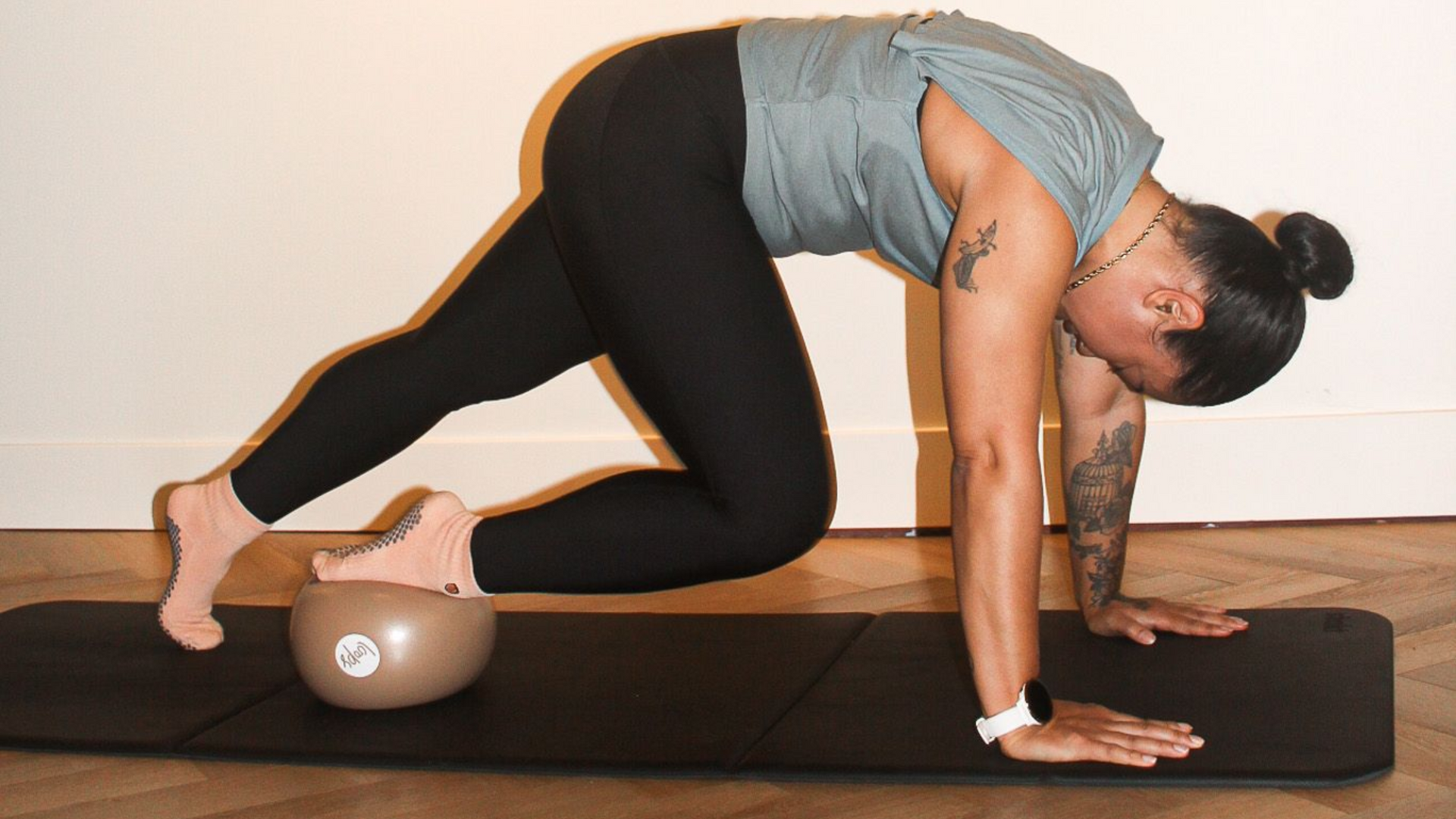
If you've ever scrolled past a barre class and thought "that's just ballet stuff, not a real workout" — I need you to stay with me for a minute, because I hear this all the time and I'm on a mission to change your mind. I've been teaching barre for years, and it is hands-down one of the most underestimated, underrated, and honestly misunderstood training modalities out there. It looks graceful. It looks low-intensity. And then about seven minutes in, your legs are shaking and you're questioning every decision you've ever made. That's barre. And I love it for you. So what actually is barre? Barre is a training method that blends elements of ballet, Pilates, yoga, and strength training. It uses a ballet barre (or a chair, or a wall — no fancy equipment required) as a stability tool while you work through small, precise movements that target specific muscle groups. The key feature of barre is isometric holds and small range-of-motion movements — meaning you're contracting a muscle and holding it under load, or pulsing through a very small range while keeping tension constant. This is very different from traditional strength training where you move through a full range of motion and then release. That difference is exactly why barre works so well — and why it burns in a way that sneaks up on you. What barre actually does for your body Let me break down the real benefits, because they go way beyond "toning" (a word I'm personally retiring from my vocabulary, but more on that another time). 1. It builds real, functional strength Barre targets the smaller stabilizing muscles that traditional lifting often misses — the muscles around your hips, knees, ankles, and core that are responsible for balance, posture, and injury prevention. These muscles matter enormously in everyday life: they're what keep you stable when you step off a curb, pick something up off the floor, or carry groceries up four flights of stairs. A consistent barre practice builds strength from the inside out. You'll feel it in how you move day-to-day long before you notice it in the mirror. 2. It dramatically improves your balance and coordination Because so much of barre is done in unstable positions — standing on one leg, working in relevé (on your toes), or moving one limb while the rest of your body stays completely still — your nervous system is constantly working to coordinate and stabilize. Over time, this trains your proprioception (your body's sense of where it is in space), which improves your balance, reduces your risk of falls and injuries, and honestly just makes you feel more at home in your body. 3. It's mobility work disguised as a workout A well-designed barre class moves your joints through their full range of motion, works your flexibility alongside your strength, and includes stretching built right into the flow. You don't need a separate mobility session when your workout already includes it. This is one of the reasons I specifically blend barre with strength and cardio in my programming — because sustainable movement means keeping your body mobile, not just strong. 4. It's genuinely accessible for most fitness levels One of the things I'm most proud of in my classes is that barre is inherently modifiable. Every exercise can be scaled up or down. You can hold the barre more firmly for extra support, reduce your range of motion, or skip the relevé entirely. Beginners feel welcome and challenged at the same time — which is a balance that's hard to strike and something I work hard to maintain. No dance experience required. No flexibility required. Just a willingness to show up and try. 5. The cardio component is real Depending on the class format, barre can get your heart rate up significantly — especially when we layer in cardio intervals, faster tempos, or compound movements that combine upper and lower body work. Cardio barre is its own thing, and it will surprise you every single time. The myths, busted "It's not a real workout." Respectfully, come take a class and then say that. The small range-of-motion movements in barre keep your muscles under tension for longer than many traditional exercises do. Sustained tension = real work. Full stop. "It's only for dancers or flexible people." Nope. I am a trained dancer and fitness professional, and I design my classes specifically so that no one needs a dance background to keep up. If you can stand and hold onto something for support, you can do barre. "It only works for women." Barre is for any body. The strength, balance, and mobility benefits are universal, and some of the most challenged students in my classes have been people who assumed it would be easy. "I need to go to a fancy studio." You can do barre in your living room with a chair and a foot of space. This is literally why I built an online platform — so that access to great programming doesn't require a $35/class boutique studio membership. How to try it without commitment I offer a free 10-day trial on my online membership platform, which gives you full access to my full on-demand video library and programs — including a range of barre, barre sculpt, cardio barre, and mobility classes. If you've been curious about barre but haven't quite taken the leap, this is your sign. Come shake your legs with me. Start your free 10-day trial → jmacwellnessindustries.com/pricing
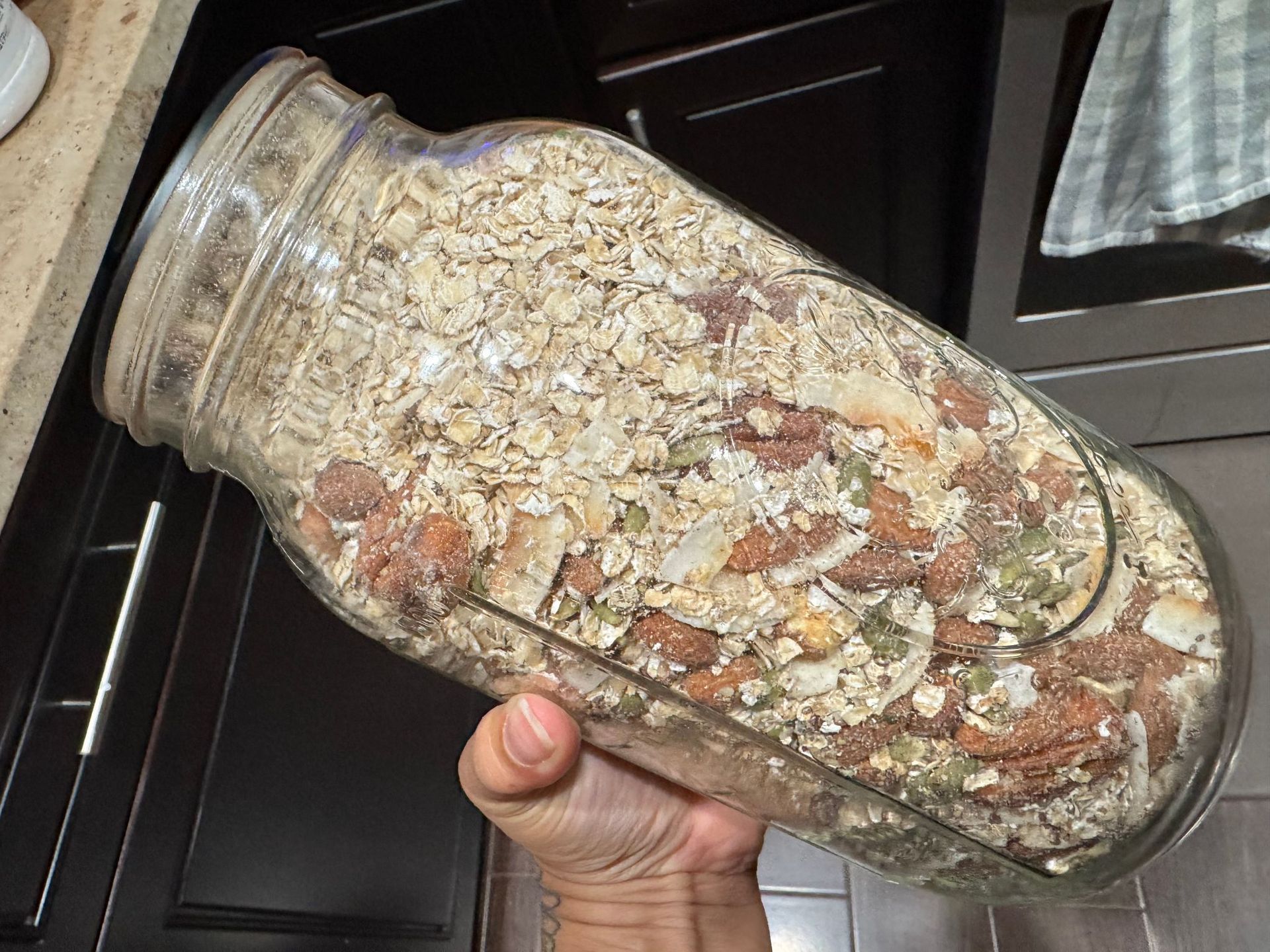
Your new favorite go to breakfast for busy mornings
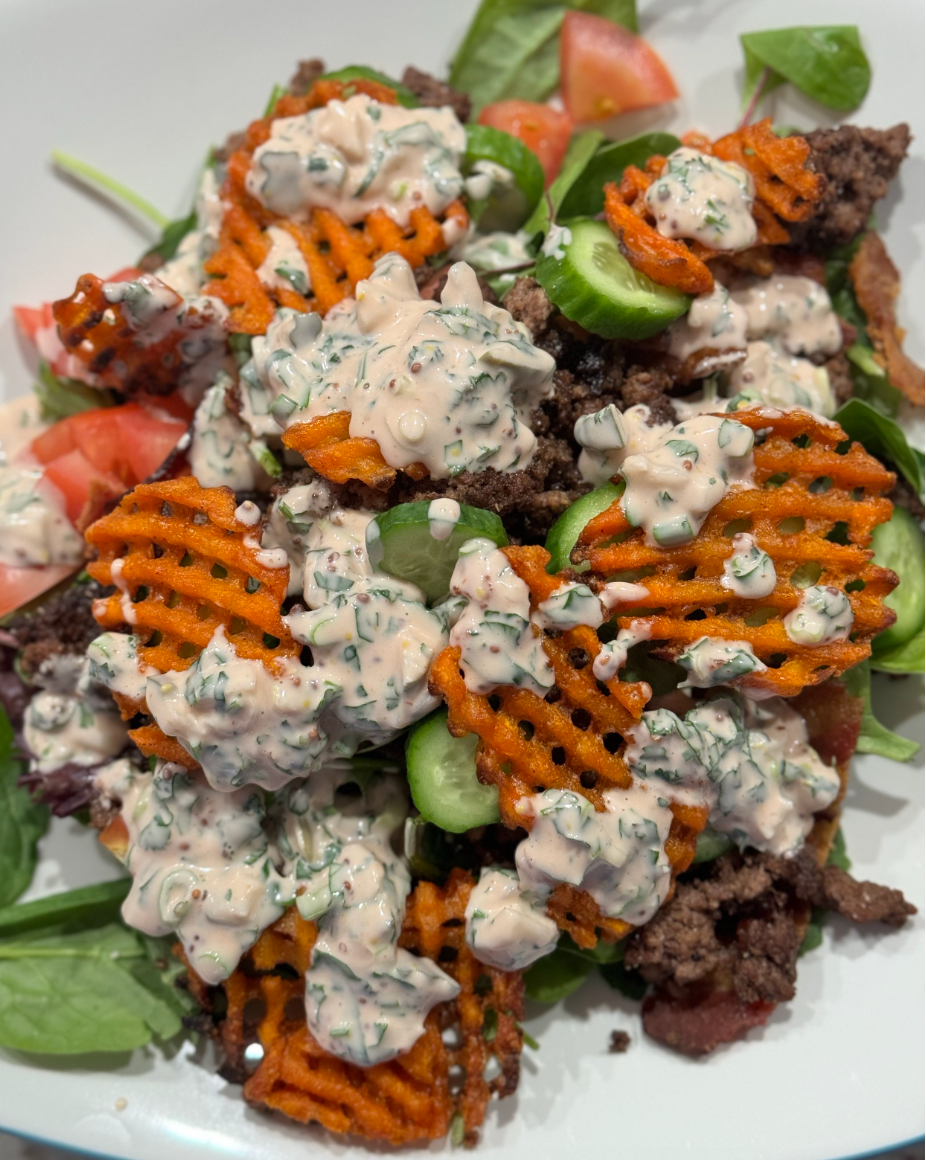
My husband’s favorite meal over the past year or so has been these burger salads. And rightfully so, they are quite delicious and simple for me to make. Literally, whatever you have on hand that’s “burger-esque” will do. I’ve made them with ground beef, ground turkey, beyond meat, and ground bison. Cheese or no cheese. Fries, potato wedges, hashbrowns. Romaine, butter lettuce, spinach, mixed greens. Whatever you’ve got. This time I used ground beef, bacon, mixed greens and spinach, tomato, cucumber and Alexia’s frozen sweet potato waffle fries (delicious addition, btw). Dressing is scallions, parsley, mayo, ketchup, mustard, dill pickles and a splash of pickle juice and a splash of water. When I say this is the easiest meal ever, I truly mean it.
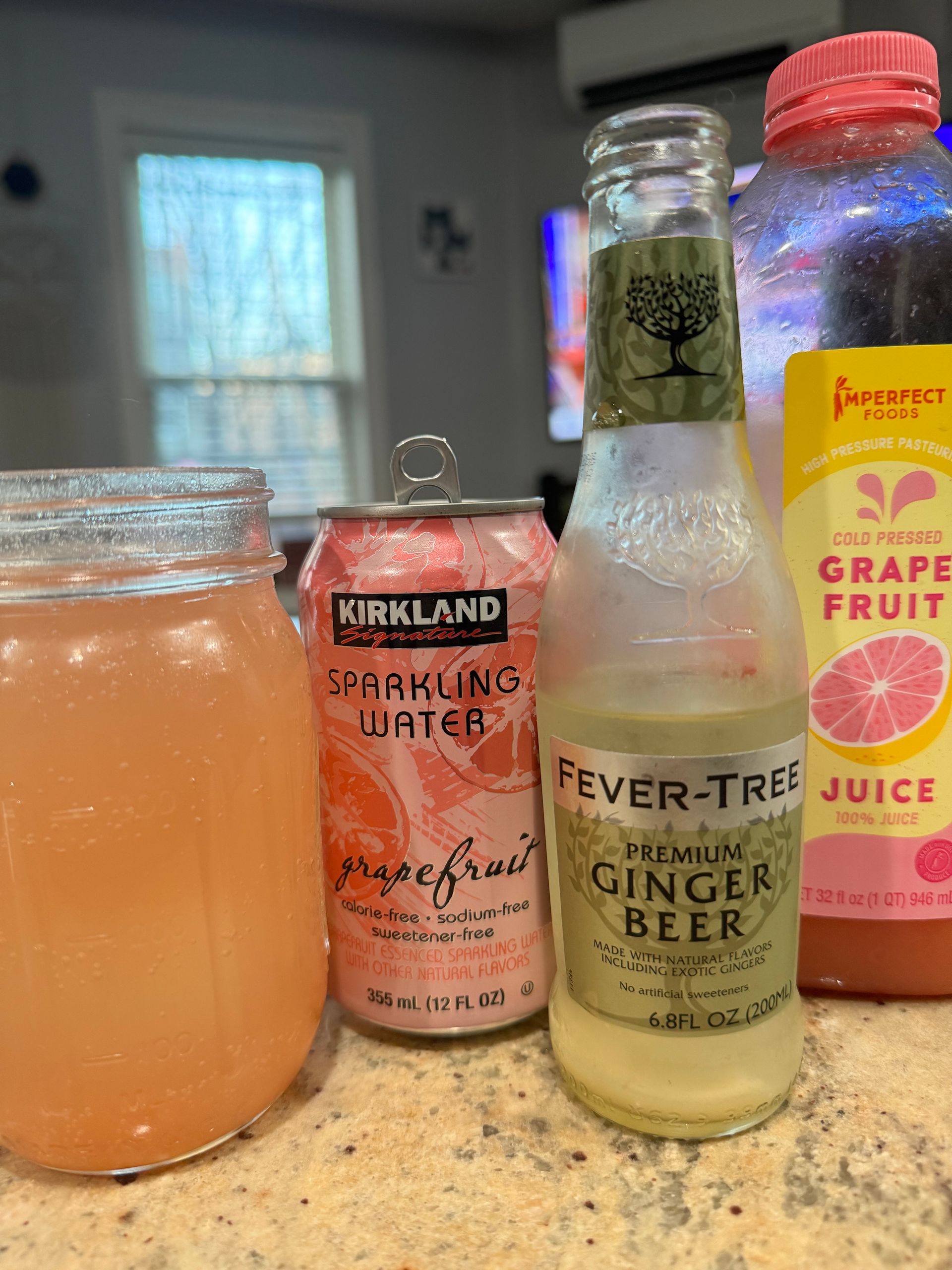
Whether you’re sober, sober curious or doing a damp or dry month for whatever your reason may be, having another mocktail up your sleeve to deviate from water and more water is always welcome. I had a ginger beer left in my fridge and created this easy and delicious bevvie for a Saturday afternoon switch up from my normal midday seltzer. Grapefruit lovers rejoice.